In this latest set of tests for the series, I focused on a different strategy involving multiple photo art images in a single post on Stage B, each showing the step-by-step breakdown of how the illustration came together. I suspect the combination of showing the process of the artwork provides more proof of human work versus automation. The reverse order of final output to an earlier version was also something I wanted to test, as most content showing process tends to be in order from oldest to newest versus newest to oldest.
A popular technique is to make video clips showing all the process in an animated loop, but I wanted to go against this pattern and generate a trajectory that requires active user engagement to swipe or scroll, rather than the passive consumption of an autoplaying video.
These seem to be the most popular of all the experiments so far, as we can see the views and interactions below:
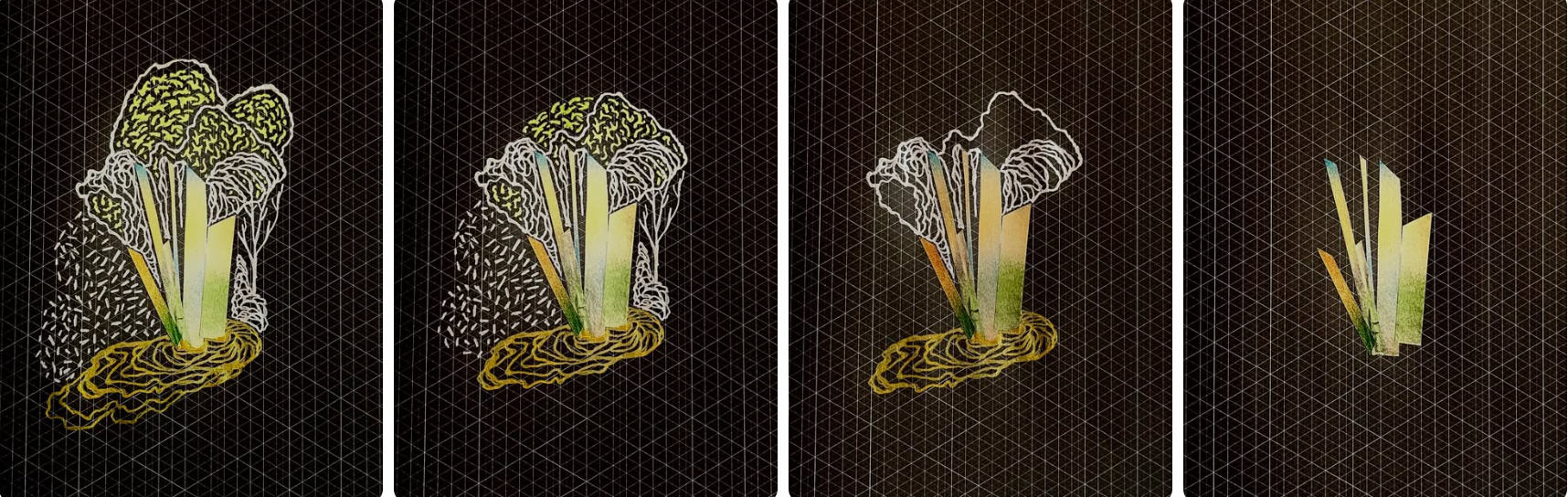
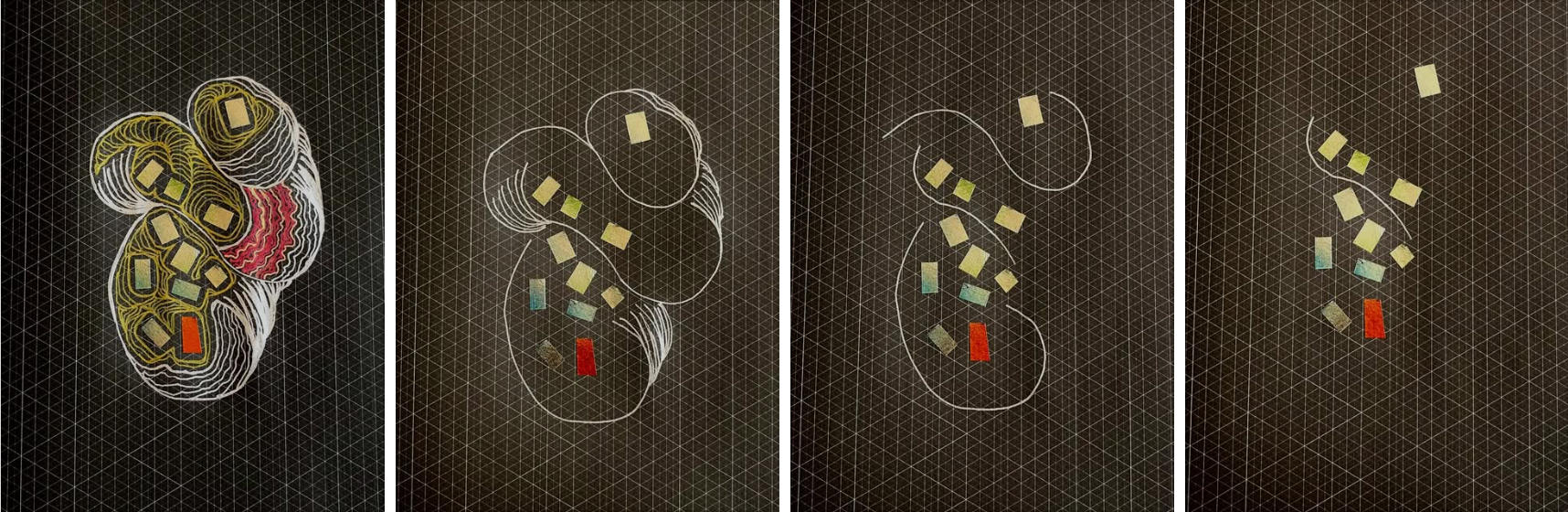
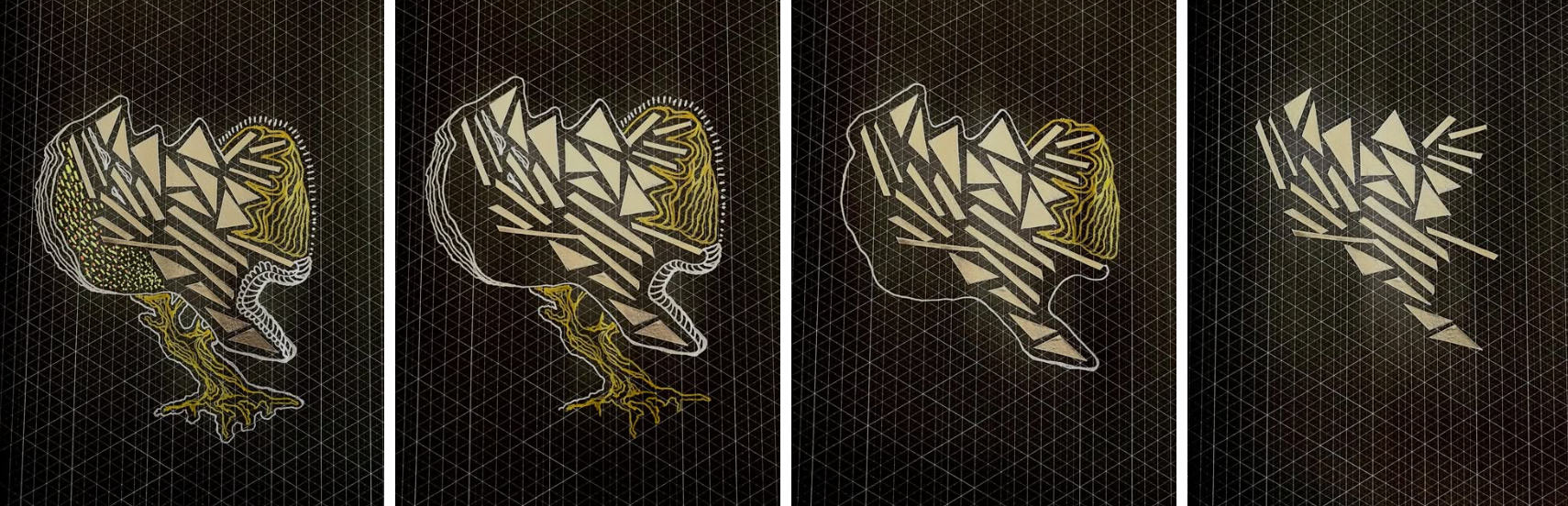
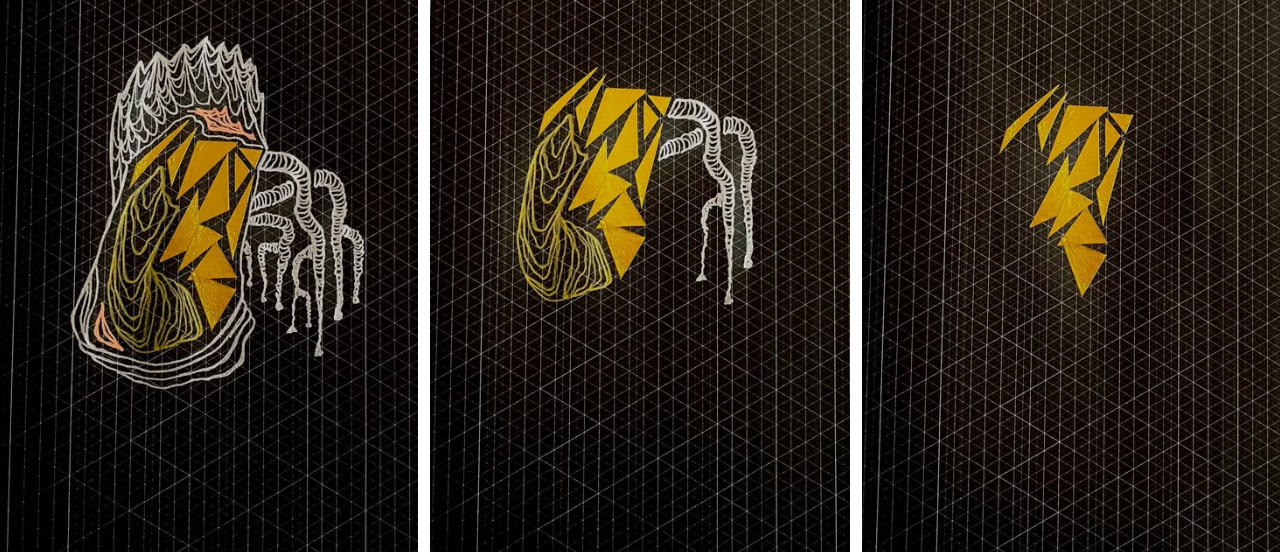
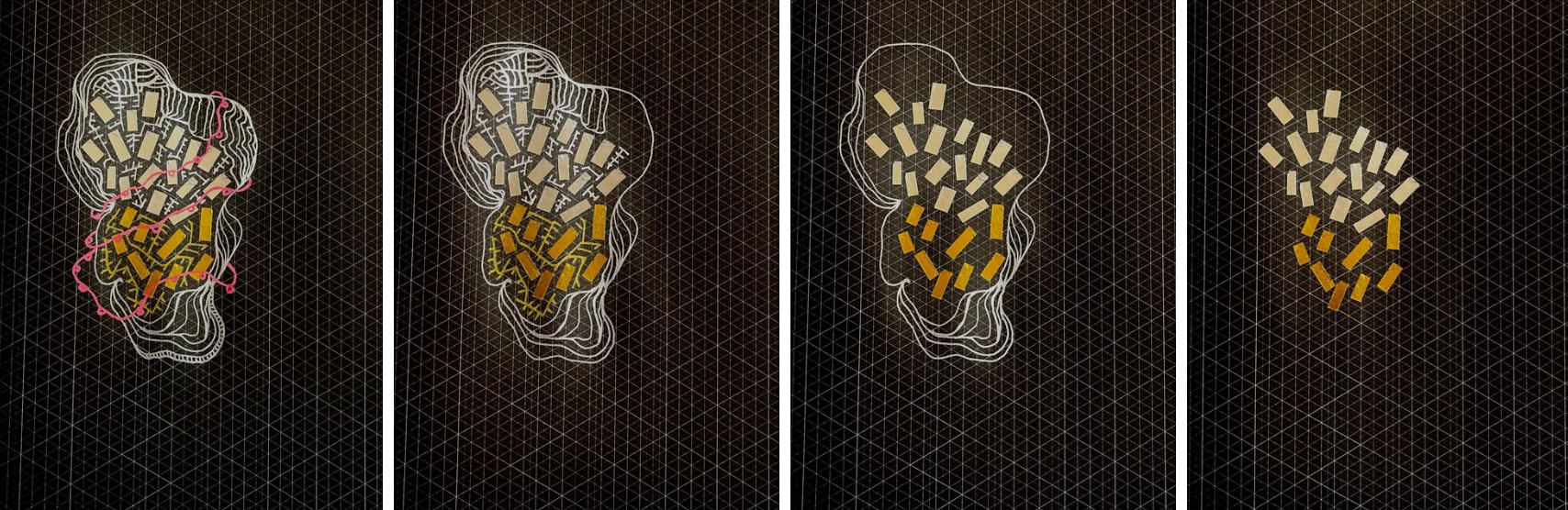
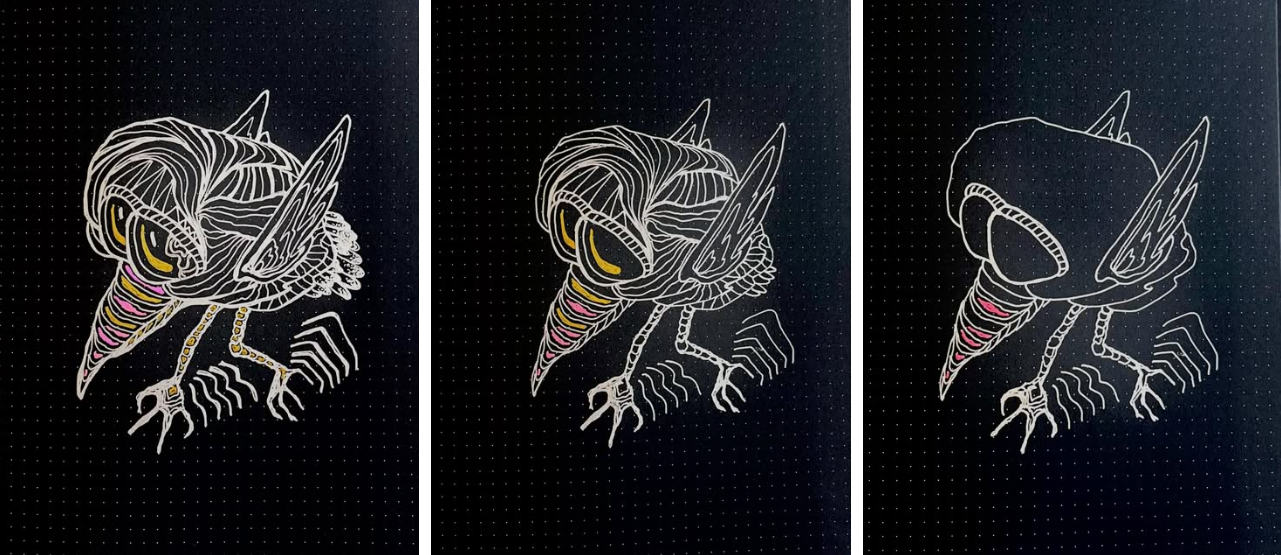
The latest one shows the most views and one of the most popular interactions — what would be the cause of this growth? Could it be the recognizable, ‘bird-like’ face of the subject? Do faces of biological creatures encourage more feed bias and broadcasting? But it’s not just that alone, as we also have to take into consideration the process evidence (proof of work) along with persistent, regular posting of content (posting content between 1-3 times a day) over a few weeks. I suppose there is an engine-like motor that warms up as content is posted from a newer account, and that motor has a decay curve that depends on the output being shared. The output has to have evidence of a construction and deconstruction of how it was created, but also how the motifs of the artist are maintained.